How to choose
Pod, filter or espresso: choosing a machine for a UK kitchen
Four decisions settle which coffee machine still gets used in year three: the grinder split, the format, the counter it has to fit, and your water.
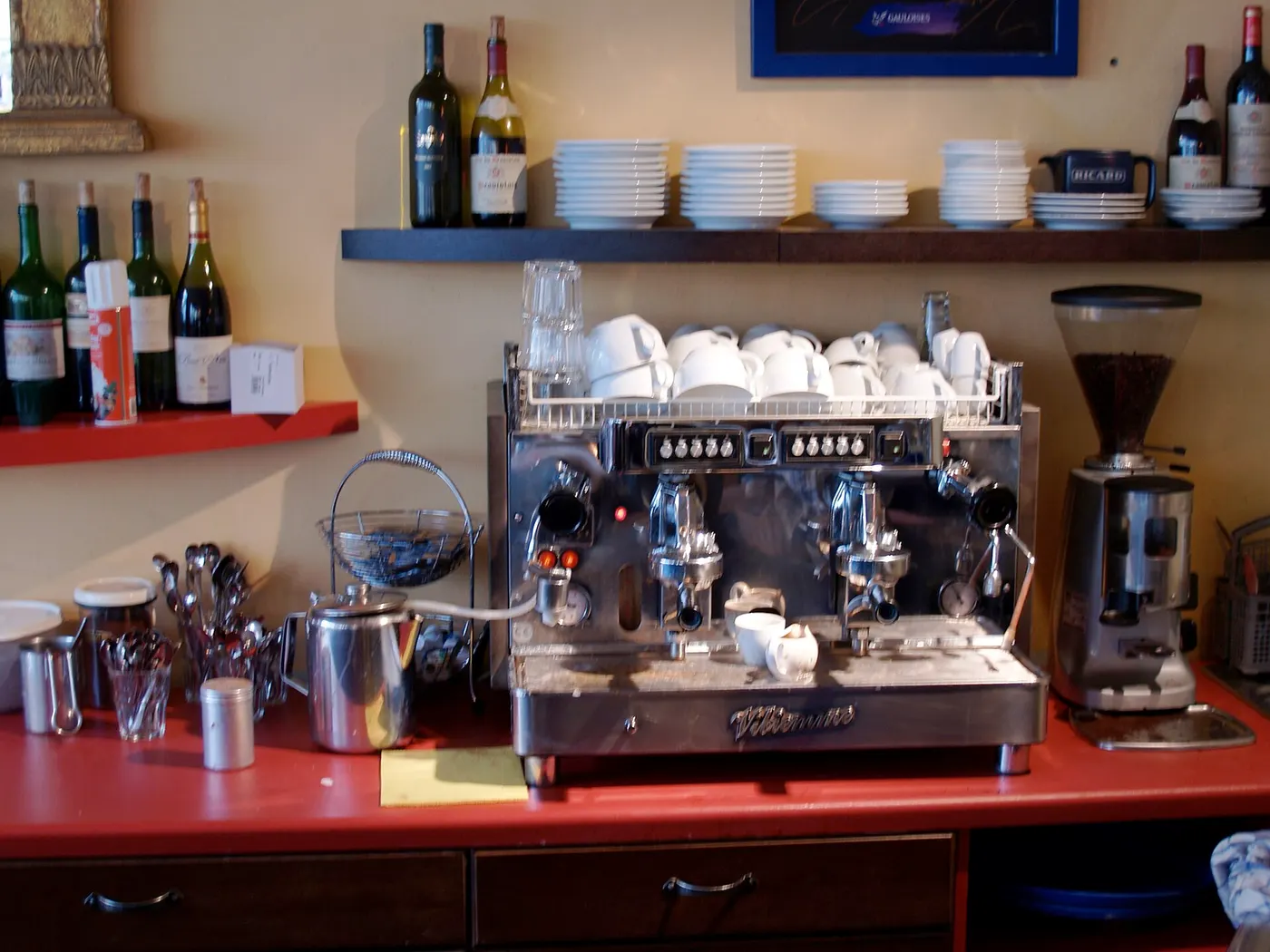
Almost every regretted coffee purchase is one of four mistakes: buying the machine before the grinder, choosing a format that does not match what you actually drink, buying something that does not fit the counter, and ignoring what your tap water will do to the boiler.
This guide takes those in order. There are no model names, scores or rankings here, because nothing on this site has been tested. What follows is the decision structure and the arithmetic behind it.
Match the format to the drink you actually make
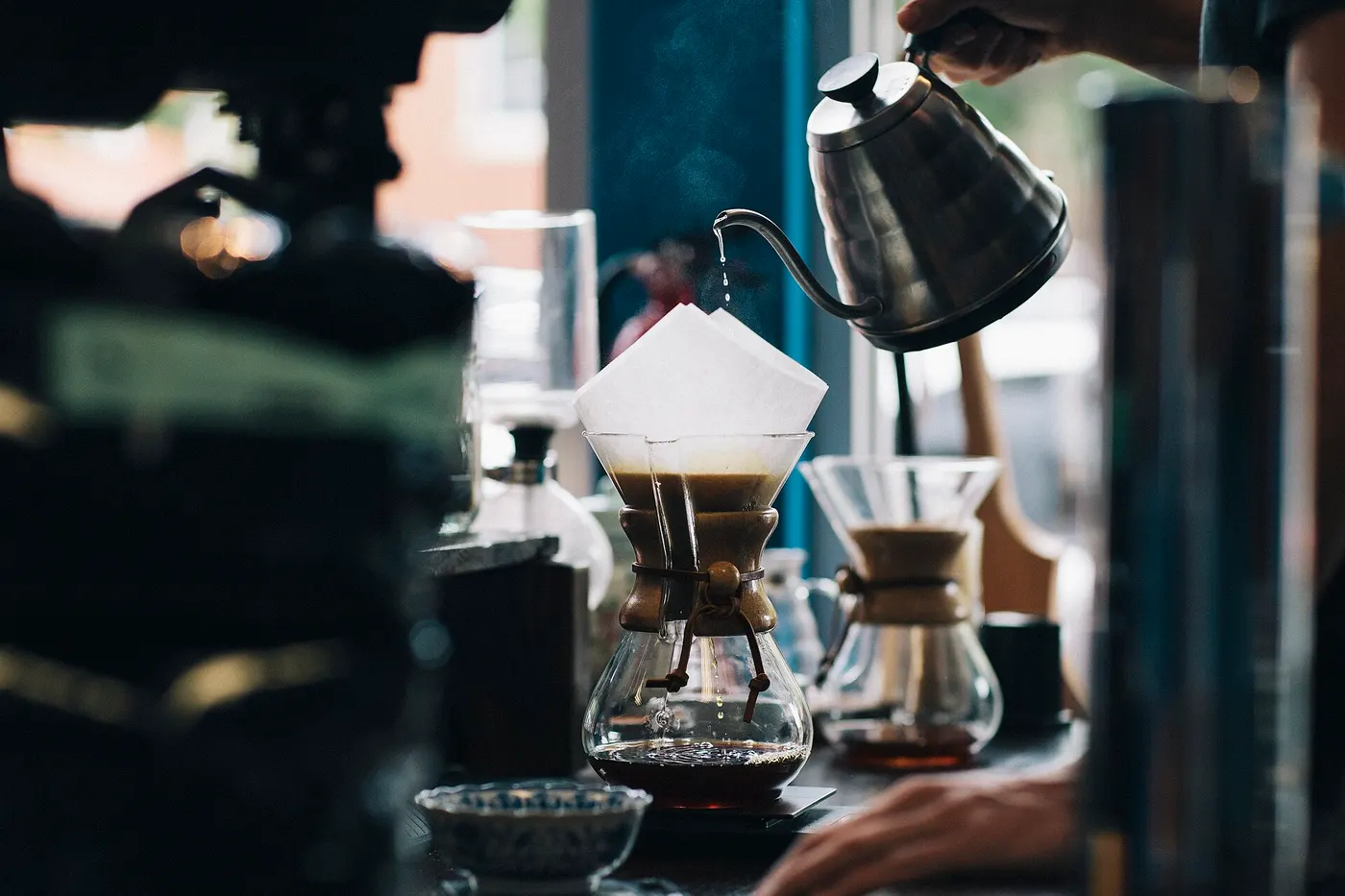
The three formats differ mostly in how much coffee they put in a cup and how much work they ask of you. A capsule holds roughly 5.5 g. A filter cup of 250 ml at a 60 g per litre brew ratio takes 15 g. An espresso double takes 18 g.
Price those at the same shop. At an example £9 for a 250 g bag, coffee costs £0.036 a gram, so a filter cup holds about 54p of coffee and a double about 65p. A capsule at an example 38p is £0.069 a gram — roughly twice the price per gram of loose beans, and cheaper per cup only because there is a third as much coffee in it.
That is the whole trade. Capsules sell convenience at a premium per gram; filter and espresso sell a lower price per gram in exchange for a grinder, a set of scales and a few minutes.
| Format | Coffee in the cup | Cost of the coffee | What it needs from you |
|---|---|---|---|
| Capsule | about 5.5 g | about 38p a capsule | Water and a recycling route |
| Filter, 250 ml at 60 g per litre | 15 g | about 54p | A grinder and a kettle |
| Espresso double | 18 g | about 65p | A grinder, scales and a repeatable routine |
Capsule pricing is quoted per capsule because you cannot buy the coffee inside it separately. At an example 38p for 5.5 g that is £0.069 a gram against £0.036 for a £9 bag of 250 g.
Grinder first, and it is not close
A machine applies pressure or water to whatever the grinder hands it. If the grind is inconsistent, water channels through the bed and no amount of pressure, temperature stability or brand name repairs the cup. A £600 machine fed by a blade grinder produces worse coffee than a £250 machine fed by a decent burr set.
A workable split puts about a third of the total into the grinder. On £600 that is roughly £200 and £400; on £350 it is about £120 and £230. These are planning ratios rather than recommendations, and the point is that the grinder share should be a third, not a tenth.
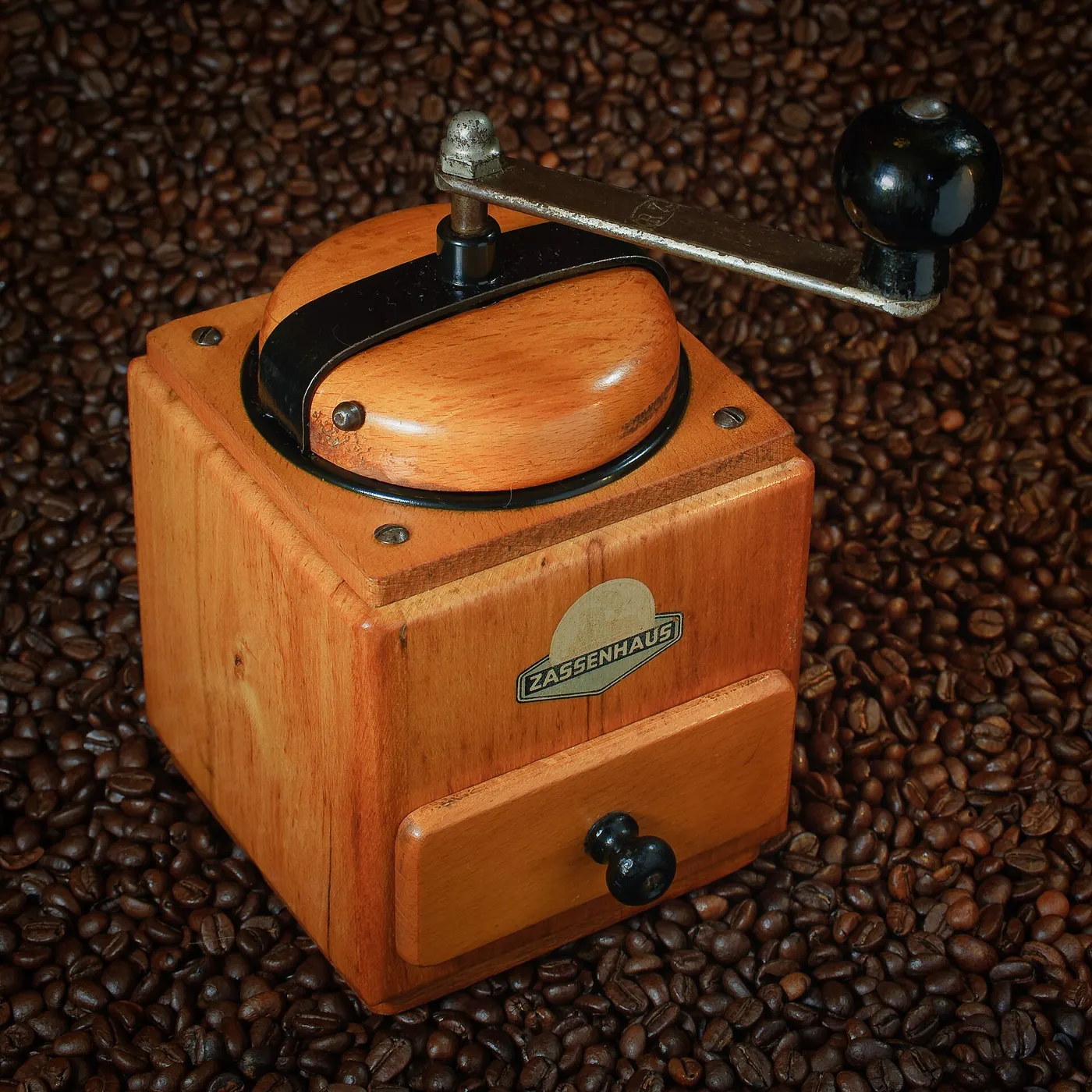
Blade grinders chop until you stop, producing dust and boulders in the same batch. Burr grinders set a gap and pass beans through it, which is why a replaceable burr set, rather than the motor, is the part worth paying for.
| Total budget | Grinder | Machine | What the split buys |
|---|---|---|---|
| £350 | about £120 | about £230 | A consistent grind makes a simple machine usable |
| £600 | about £200 | about £400 | Room for a pump machine with listed spare parts |
| £1,200 | about £400 | about £800 | Temperature stability starts to be the limit instead of grind |
These are allocations of one purchase, not product recommendations, and they assume you buy both together rather than upgrading over 2 years.
There is no energy label, so read the plate
The GB energy information rules list the product groups that must carry an A to G label: dishwashers, washing machines and washer-dryers, household tumble driers, refrigerating appliances, electronic displays including televisions, ovens and range hoods, space and water heaters, ventilation units and lighting products. Coffee machines are not on that list, and no label exists to compare.
What you can compare is the rated power printed on the plate and how long the machine holds itself hot. A 1,350 W machine heating for 4 minutes a day is about 33 kWh a year; the same machine idling at 30 W for 12 hours a day adds about 131 kWh. The second number is four times the first and it is the one the specification sheet never states.
Look for an auto-off interval you can set, and check whether it is measured in minutes or fixed by the firmware. That single setting is worth more on the bill than any difference in heating element wattage between two machines of the same type.
- Find the rated wattage on the plate or in the manual before ordering
- Ask what the auto-off interval is and whether it can be changed
- Put both figures into the running-energy calculator with your own unit rate
- Treat a machine with no stated standby behaviour as one that idles hot
Counter, water and the first 30 days
Measure the height to the underside of the wall cabinet, not just the counter depth, and measure the machine with its tank lid open. A unit 35 cm tall with a top-filled tank needs about 45 cm of clear height to be refillable without dragging it out every morning. Allow about 10 cm behind it for the tank and the plug.
Water decides how much of the machine you will be maintaining. The Drinking Water Inspectorate classifies supplies from soft, up to 100 mg/l of calcium carbonate, through to very hard above 300 mg/l, and notes that water at 200 mg/l or above produces scale. Your water company publishes a figure for your postcode, and in a hard-water area the filter and descaler bill is a standing cost rather than an occasional one.
If the machine turns out to be faulty, the Consumer Rights Act 2015 gives a short-term right to reject that ends 30 days after delivery. Buying online adds a separate 14-day cancellation period under the Consumer Contracts Regulations 2013, which runs from the day the goods reach you and does not require anything to be wrong with them.
Before you buy
- Decide the total budget first, then allocate about a third of it to the grinder
- Count how many milk drinks and how many black drinks you make in a typical morning
- Measure cabinet height, counter depth and tank-lid clearance in centimetres before ordering
- Find the rated wattage and the auto-off interval for the model you are considering
- Look up your supply's hardness band and price a year of filters and descaler against it
- Open the manufacturer's parts page and confirm gaskets, baskets and burrs are sold separately
- Note the delivery date, because the 30-day right to reject runs from it
Questions readers ask
- Can I buy the machine now and a proper grinder later?
- You can, and it is the usual route to paying twice. Pre-ground coffee or a blade grinder will mask whatever the machine can do for the months in between, so the common conclusion is that the machine disappoints and gets replaced. If the budget only stretches one way, buy the grinder first and brew by another method until the machine arrives.
- Is a bean-to-cup machine a shortcut past the grinder decision?
- It moves the decision inside the casing rather than removing it. The burr set and its adjustment range are still what limits the cup, and on a sealed unit you cannot upgrade them separately. Check whether the burrs are listed as a spare part before treating a bean-to-cup machine as a 5-year purchase.
- How much counter space do I really need?
- The footprint plus about 10 cm behind for the tank and plug, and clear height measured with the tank lid open rather than closed. A grinder needs its own footprint beside the machine, not in front of it, so that you are not lifting one to use the other.
- Is a capsule machine a reasonable first machine?
- It is a good way to find out how many coffees a day you genuinely make, which is the number every calculation on this site turns on. It is a poor way to find out whether you want an espresso setup, because the variables you would be learning to control are exactly the ones a capsule removes.
Sources
- GOV.UK — Regulations: energy information (list of product groups requiring a GB energy label) — checked 2026-11-03
- Drinking Water Inspectorate — water hardness classification in mg/l calcium carbonate — checked 2026-11-03
- Consumer Rights Act 2015, section 22 — time limit for the short-term right to reject — checked 2026-11-03
- Consumer Contracts (Information, Cancellation and Additional Charges) Regulations 2013, regulation 30 — cancellation period — checked 2026-11-03
Advertising is not enabled on this site yet. When it is, ads will be labelled and kept visually separate from the guides.