Maintenance
Descaling, filters and the water your machine drinks
Your hardness band, not the calendar, sets the descaling interval. Here is the UK classification, an example schedule costed per year, and what filters do.
Scale is the most common reason a domestic coffee machine dies before its fifth birthday. It forms inside the boiler and the pipework, narrows the path the water takes, and the machine brews cooler and slower for months before it stops.
How fast that happens is set by the hardness of your supply, which varies enormously across the UK. This guide puts the published classification next to an example schedule and its annual cost, so you can place your own household rather than following a generic interval.
Find your hardness band first
The Drinking Water Inspectorate classifies supplies by total hardness measured as milligrams per litre of calcium carbonate: soft up to 100, slightly hard 100 to 150, moderately hard 150 to 200, hard 200 to 300, and very hard above 300. The regulations set no standard for hardness, calcium or magnesium, because it is a nuisance rather than a health question.
The number that matters for a coffee machine is 200. The Inspectorate, citing the World Health Organisation's 2017 guidelines, states that water at 200 mg/l or above will produce scale. Below roughly 100 mg/l the opposite problem appears: soft water is more corrosive to pipework.
Hardness maps show typical values for England and Wales, but there is local variation a map cannot capture, so the figure published by your own water company for your postcode is the one to write down.
| Band | Hardness as mg/l CaCO3 | Example interval | Treatments a year | Cost a year |
|---|---|---|---|---|
| Soft | up to 100 | every 6 months | 2 | £4 |
| Slightly hard | 100 to 150 | every 4 months | 3 | £6 |
| Moderately hard | 150 to 200 | every 3 months | 4 | £8 |
| Hard | 200 to 300 | every 2 months | 6 | £12 |
| Very hard | over 300 | every 6 weeks | 9 | £18 |
The bands and the 200 mg/l scale threshold come from the Drinking Water Inspectorate. The intervals and the £2 a treatment are an example schedule for costing, not a manufacturer instruction; where a machine states its own interval, that one wins.
What a filter does, and what it does not
A cartridge filter reduces hardness and chlorine reaching the boiler, which slows scale rather than stopping it. The Drinking Water Inspectorate is explicit that a cartridge must be changed in line with the manufacturer's instructions or it ceases to be effective, and that failure to change it builds up deposits, creates a breeding ground for bacteria and leaches removed material back into the water.
That turns the filter into a scheduled cost rather than an optional accessory. A £5 cartridge changed every 2 months is 6 a year and £30, which on 730 cups is about 4p each. Add the £8 from the moderately hard row above and consumables come to £38 a year, about 5p a cup.
A plumbed-in softener is a different device and it does not belong on a drinking line. Softeners work by ion exchange, replacing calcium and magnesium with sodium, and the Inspectorate advises keeping an unsoftened supply to the kitchen tap for drinking and cooking, and states that artificially softened water should not be used to make up baby feeds.
- £5 cartridge every 2 months = 6 a year = £30, about 4p a cup at 2 cups a day
- Descaling every 3 months at £2 = £8 a year, about 1p a cup
- Together about £38 a year, roughly 5p on each of 730 cups
- An unchanged cartridge is worse than no cartridge, because deposits and bacteria build up inside it
The weekly five minutes that matters more than the annual service
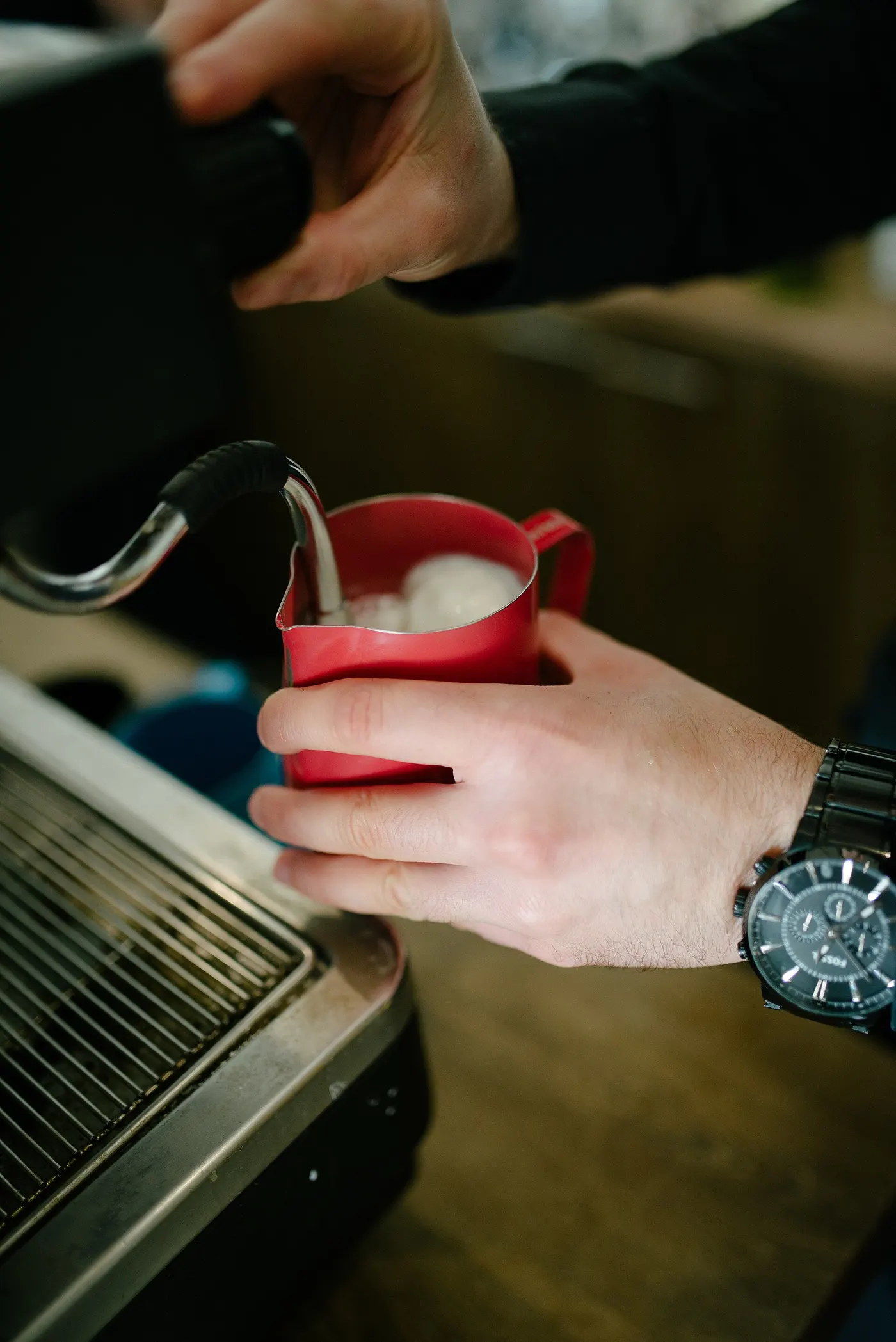
Daily and weekly cleaning is separate from descaling and far cheaper. Wiping and purging the steam wand immediately after each use takes about 5 seconds and prevents the milk residue that later needs the wand stripped. Rinsing the group and the basket after the last drink of the day takes under a minute.
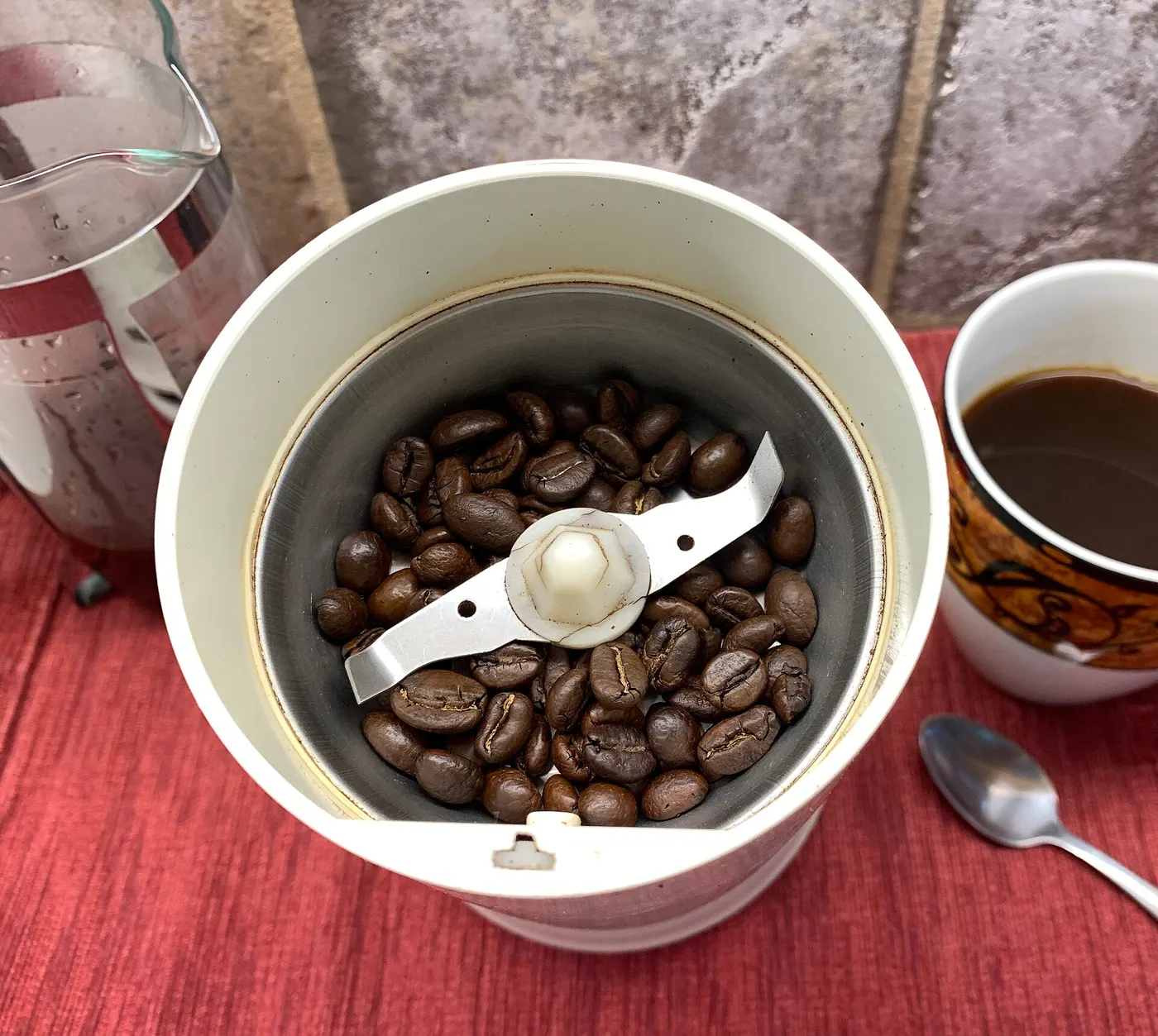
A weekly backflush or group clean on a machine that supports one takes about 2 minutes and removes the coffee oils that otherwise turn rancid and taint every shot. Grinders need the same attention: oils build up in the chute and on the burrs, and a brush-out every 2 weeks keeps the dose consistent.
None of this delays descaling. Cleaning removes coffee residue; descaling removes mineral deposit. They are different jobs with different products, and using a descaler as a cleaner leaves the oils exactly where they were.
| Task | How often | Time | What it removes |
|---|---|---|---|
| Purge and wipe the steam wand | After every milk drink | about 5 seconds | Milk residue |
| Rinse group, basket and drip tray | Daily | about 1 minute | Loose grounds and standing water |
| Backflush or group clean | Weekly | about 2 minutes | Coffee oils |
| Brush out the grinder chute and burrs | Every 2 weeks | about 5 minutes | Stale oily grounds |
| Descale | By hardness band, above | about 30 minutes | Calcium carbonate scale |
When the machine is already slow
A machine that has started brewing cool and slow is usually telling you the interval was too long rather than that the pump has failed. The order of investigation is shower screen and basket first, because blocked holes imitate scale, then the filter cartridge, then a descale.
If a descale restores the flow rate, the interval in the table above was too long for your water and the next one should be shorter. If it does not, the restriction is somewhere the descaler does not reach, and that is a parts question: gaskets, a shower screen or a pump.
Record the date of each descale on the machine itself with a piece of tape. Over 2 years that single note tells you more about your own water than any map, because it ties an interval to an outcome you observed.
Before you buy
- Look up your supply's hardness in mg/l of calcium carbonate and write it on the machine
- Place yourself in one of the five bands and set the descaling interval from that row
- Diarise the filter cartridge change at 2 months rather than waiting for a taste change
- Keep descaler and group cleaner as two separate products, because they remove different things
- Purge and wipe the steam wand after every milk drink
- Note the date of each descale on tape stuck to the machine
- If flow has slowed, check the shower screen and basket before assuming the boiler is scaled
Questions readers ask
- Can I use bottled water instead of descaling?
- Only if you read the mineral content on the label, because some bottled waters are harder than the mains. Deionised or distilled water goes too far the other way: machines with a water-level probe need some conductivity to detect the level, and very low mineral water tastes flat because minerals carry extraction. A cartridge filter on tap water is the usual middle route.
- How do I find my hardness figure?
- Your water company publishes it for your postcode, usually as mg/l of calcium carbonate, which maps straight onto the five bands above. National hardness maps give a typical value for an area, but the Drinking Water Inspectorate notes local variation that a map does not show, so the company figure is the more reliable one.
- Is a water softener a good idea for the kitchen?
- Not on the drinking line. Softeners replace calcium and magnesium with sodium by ion exchange, and the Drinking Water Inspectorate advises retaining an unsoftened supply to the kitchen tap for drinking and cooking and says softened water should not be used to make up baby feeds. A cartridge filter on the machine's own tank is the narrower fix.
- What does skipping two descales actually cost?
- On the example figures it saves £4 and risks a machine worth £450. Scale narrows the boiler path and the usual symptom sequence is cooler water, then slower flow, then a pump working against a restriction. The arithmetic is lopsided: £8 a year of descaler against 12p a cup of machine that only exists while the machine does.
- Does a filter cartridge remove the need to descale?
- No. It reduces the hardness reaching the boiler, which lengthens the interval rather than removing it, and only while the cartridge is fresh. An unchanged cartridge stops filtering and, as the Drinking Water Inspectorate warns, becomes a site for deposits and bacteria, so a 2-month change interval is part of the descaling plan rather than an alternative to it.
Sources
- Drinking Water Inspectorate — water hardness classification and the 200 mg/l scale threshold — checked 2026-11-03
- Drinking Water Inspectorate — domestic water filters and softeners — checked 2026-11-03
- Ofgem — energy price cap unit rates and standing charges, 1 October to 31 December 2026 — checked 2026-11-03
Advertising is not enabled on this site yet. When it is, ads will be labelled and kept visually separate from the guides.